


Invisalign vs. Braces for Adults: The Short Answer
For most adults dealing with mild to moderate crowding, spacing, or shifting, Invisalign and braces can get you to a very similar result.
The decision really comes down to two things: how complex your case is, and how realistically you can commit to wearing something removable every day. Braces stay bonded to your teeth and keep working around the clock without any effort on your part. Aligners, on the other hand, only move your teeth when they're actually in your mouth.
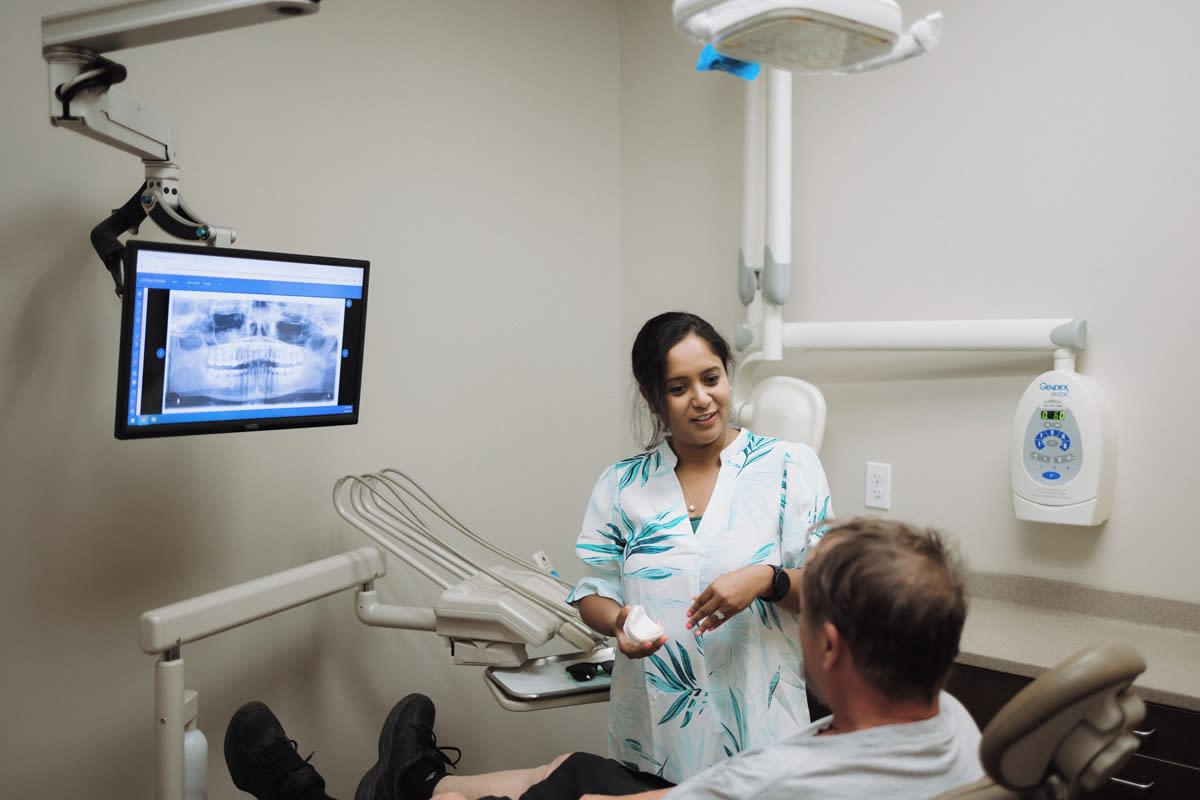
Dr. Amrita and the team at Kent Station Family Dentistry have this conversation with adults in Kent almost every week, usually with someone who has spent a few nights reading conflicting opinions online. If you're ready for aligners, our Invisalign page walks through how treatment works from your first scan all the way through your final retainer.
If you'd rather skip the reading and just get answers about your own teeth, a free virtual or in-person Invisalign consultation is available whenever you're ready. You can call us at (253) 850-1600 or request an appointment online.
What This Guide Covers
We wrote this guide to answer the questions patients actually bring to their consultations. Here is what we cover:
- Why adult teeth shift, including late crowding, grinding, tooth loss, and relapse after childhood braces. (Yes, this happens even if your teeth were straight before.)
- How much wear time matters, because with clear aligners, how consistently you wear them is the single biggest factor in whether treatment works.
- Timelines and what each stage of treatment actually feels like day to day.
- Retention, meaning what happens after your teeth are straight and how you keep them that way long term. This part is often skipped, and it should not be.
Why Adult Teeth Shift, Crowd, and Change Over Time
Many adults assume crooked teeth are something you either had at fifteen or you didn't. Then they look at a photo from a decade ago and notice their lower front teeth used to line up. Here's the thing: teeth are not fixed in place. They sit in bone and are held by a flexible ligament that responds to pressure, which means they can and do move throughout your life, whether or not anyone is trying to move them.
Late lower crowding
The lower front teeth tend to bunch up gradually through your twenties, thirties, and beyond. This is actually one of the most common reasons adults start looking into Invisalign in Kent. The causes are pretty straightforward: the forces from chewing, the natural pressure from your lips and tongue, and the slow narrowing of the lower jaw all push those front teeth closer together over time.
Relapse after childhood braces
If you wore braces as a teenager and stopped wearing your retainer, your teeth likely drifted back toward where they started. This happens to a lot of people, and it's not your fault. Retention was often never explained as a lifelong habit. The good news is that many adult cases like this are correcting a small drift, not starting from scratch.
Tooth loss and drifting
When a tooth is removed and not replaced, the neighboring teeth tend to tip into the empty space. The tooth above or below that gap can also drift toward it over time. It sounds gradual, and it is, but one missing molar can quietly shift a whole section of your bite over the years.
Wear and grinding
Clenching and grinding wear down the biting edges of your teeth and change how your upper and lower teeth fit together. As those surfaces flatten, your teeth shift to find a new resting position. If your jaw aches or your teeth look shorter than they used to, it's worth talking to us about TMD treatment before starting any tooth movement.
Gum and bone changes
Gum disease weakens the bone and tissue that hold your teeth in place. When that support is reduced, teeth move more easily than they should. If you notice flaring, new spacing, or shifting in your forties or fifties, that can be a sign that the foundation needs attention first. In those cases, gum disease treatment comes before any aligners go in.
How Braces and Clear Aligners Actually Move Teeth
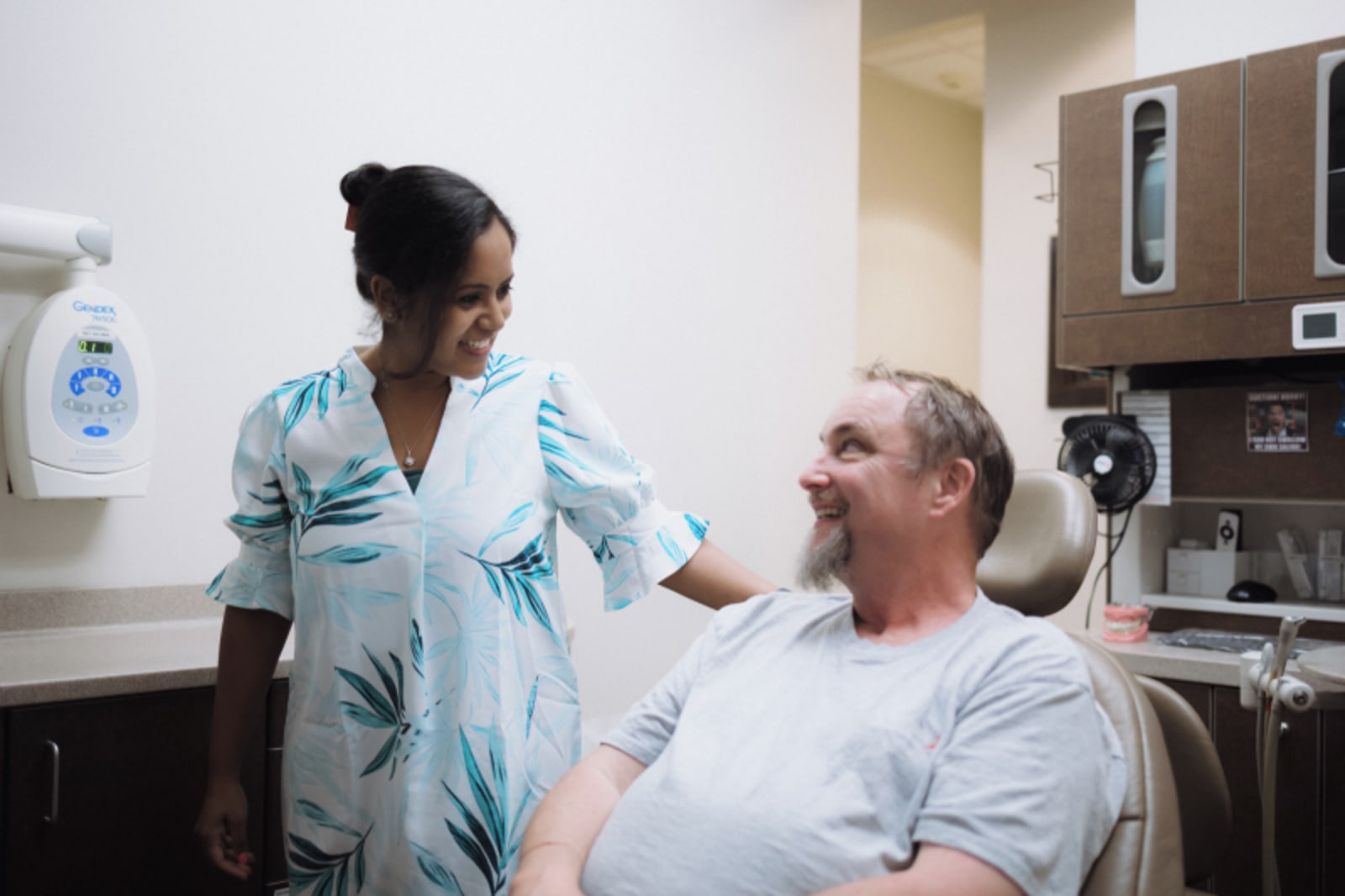
Both approaches work the same way underneath. When gentle, steady pressure is applied to a tooth, the bone on the pressure side slowly breaks down while new bone builds in behind it. Your body is doing all the real work. The appliance just gives it a direction and a pace to follow.
The difference between braces and aligners is how that pressure gets delivered. With braces, small brackets are bonded directly to your teeth and connected by a wire. That wire has a natural shape it wants to return to, and as it does, it gradually guides your teeth along with it. Your provider swaps out wires over time to control how each tooth tips, rotates, and shifts at the root level.
With aligners, each tray is designed to sit just slightly ahead of where your teeth currently are. Putting it on creates gentle pressure. You wear that tray for a set period, then move to the next one, nudging your teeth along the planned path in small, controlled steps.
Who Each Option Suits Best: Matching Treatment to Your Case and Personality
Choosing the right treatment isn't just about what's going on with your teeth. It's also about how you live your day-to-day life. A good provider will ask about both, because the best clinical option in the world won't work if it doesn't fit how you actually operate.
Clear aligners tend to suit
Invisalign works well for mild to moderate crowding, spacing issues, relapse after childhood braces, and many bite corrections when the case is planned carefully. On the lifestyle side, aligners tend to work best for people with fairly steady routines: regular meal times, no all-day snacking, and a comfort level with being in charge of their own progress.
Fixed braces tend to suit
Braces are typically the better fit for more complex cases: severe crowding, teeth that need significant rotation, large bite discrepancies, or situations where the roots themselves need to be moved into a very precise position.
That level of control is harder to achieve with removable trays. Braces are also a good fit for people who know, honestly, that they won't be consistent about wearing something removable for 20 to 22 hours a day. That kind of self-awareness is genuinely useful to bring to a consultation, not something to be embarrassed about.
Limited treatment tends to suit
Sometimes the goal isn't a full correction. If your bite is fundamentally healthy and you have one specific concern, like two teeth that drifted or a small amount of relapse after childhood braces, limited treatment may be all you need. It covers a contained area over a shorter timeframe, and it's a reasonable option for someone who wants meaningful improvement without committing to a comprehensive plan.
When a referral is the right answer
Some cases involve a mismatch between the upper and lower jaws themselves, not just the teeth. When that's the situation, moving teeth alone can't fully correct the problem, and a surgical specialist may be the right next step. If that's what your records show, we'll tell you at the consultation rather than start a plan that won't get you where you want to go.
Not everyone is a clear aligner candidate, and your 3D scan gives us a clear picture very quickly. If aligners aren't the right fit for your case, we'll say so.
Appearance, Speech, and Daily Life at Work
Caring how you look during treatment isn't vanity. If you present to clients, lead a team, or need to hold a room, your appearance is part of your professional toolkit. It makes sense to think about how treatment fits into that.
Metal brackets are the most noticeable option at close range, which is exactly the distance a client meeting happens at. Ceramic brackets are less obvious, but the wire across your front teeth still shows. Clear aligners sit flush against your teeth and are nearly invisible at normal conversational distance. Most people won't notice them at all.
The lisp question
This one comes up a lot, and the honest answer is: there can be a short adjustment period. The aligners sit against your teeth and the roof of your mouth, so your tongue has to get used to a slightly different landscape.
Sounds like "s" and "th" can feel a little off at first. The good news is that it's almost always more noticeable to you than to anyone else, and most people are speaking normally again within a few days to a couple of weeks. Reading aloud for about ten minutes each night can help speed that up.
Braces come with their own adjustment period too, plus cheek and lip irritation from the brackets, which aligners don't cause. If speech is a real concern for you, bring it up at your consultation and Dr. Amrita can walk you through what the first week typically looks like.
Eating and social situations
One of the biggest lifestyle perks of aligners is that they come out for meals. That means no food restrictions at a work lunch or a client dinner. The practical side is that you'll need a discreet moment to remove them and somewhere to store them safely, and you'll want to rinse or brush before putting them back in. With braces, the appliance stays on your teeth around the clock, which means a list of foods to avoid for the entire length of treatment.
Coffee and drinks
With aligners in, plain water is the only safe option. Coffee, tea, and anything with sugar or color should be consumed with the trays out. This matters for two reasons: colored drinks can stain the trays, and sugary drinks trapped against your teeth under a tray create the perfect environment for cavities.
For people who drink coffee throughout the day, this is usually the biggest daily habit to adjust to. And if years of coffee have already affected the color of your teeth, in-office whitening is a popular finishing step once your teeth have reached their final position.
Removing them for a big moment
You can take your aligners out for a presentation or a photo. Doing that occasionally is completely fine. Doing it regularly, though, starts to eat into your wear time, and that's where results can slip. The next section covers why consistent wear time matters so much.
Compliance and Wear Time: The Part That Decides Your Result
Aligners need to be worn 20 to 22 hours a day. That leaves roughly two to four hours for eating, drinking, and brushing your teeth combined. It sounds like plenty of time, but once you factor in three meals, a coffee break, and your oral hygiene routine, it goes faster than you'd expect.
Braces work differently. Since they're bonded directly to your teeth, they keep doing their job around the clock, whether you're thinking about them or not. That's the single biggest practical difference between the two options, and for a lot of people, it matters more than appearance or cost.
Here's what happens when aligners aren't worn enough:
- Your teeth don't quite reach the position the current tray was designed for, so the next tray fits poorly and your progress starts to slip
- Your overall timeline stretches out, sometimes by several months
- You may need refinements, which means a new scan and an additional set of trays to get your teeth back on track
- In more serious cases, treatment may need to restart from wherever your teeth currently sit
The good news is that a few simple habits make it very manageable. Put your trays back in as soon as you finish eating. Keep a travel toothbrush and your aligner case in your bag so you're never caught off guard. Try changing to a new tray at night so the adjustment period happens while you sleep.
Most patients say the routine feels completely automatic by the second month.
Treatment Timelines and What Each Stage Feels Like
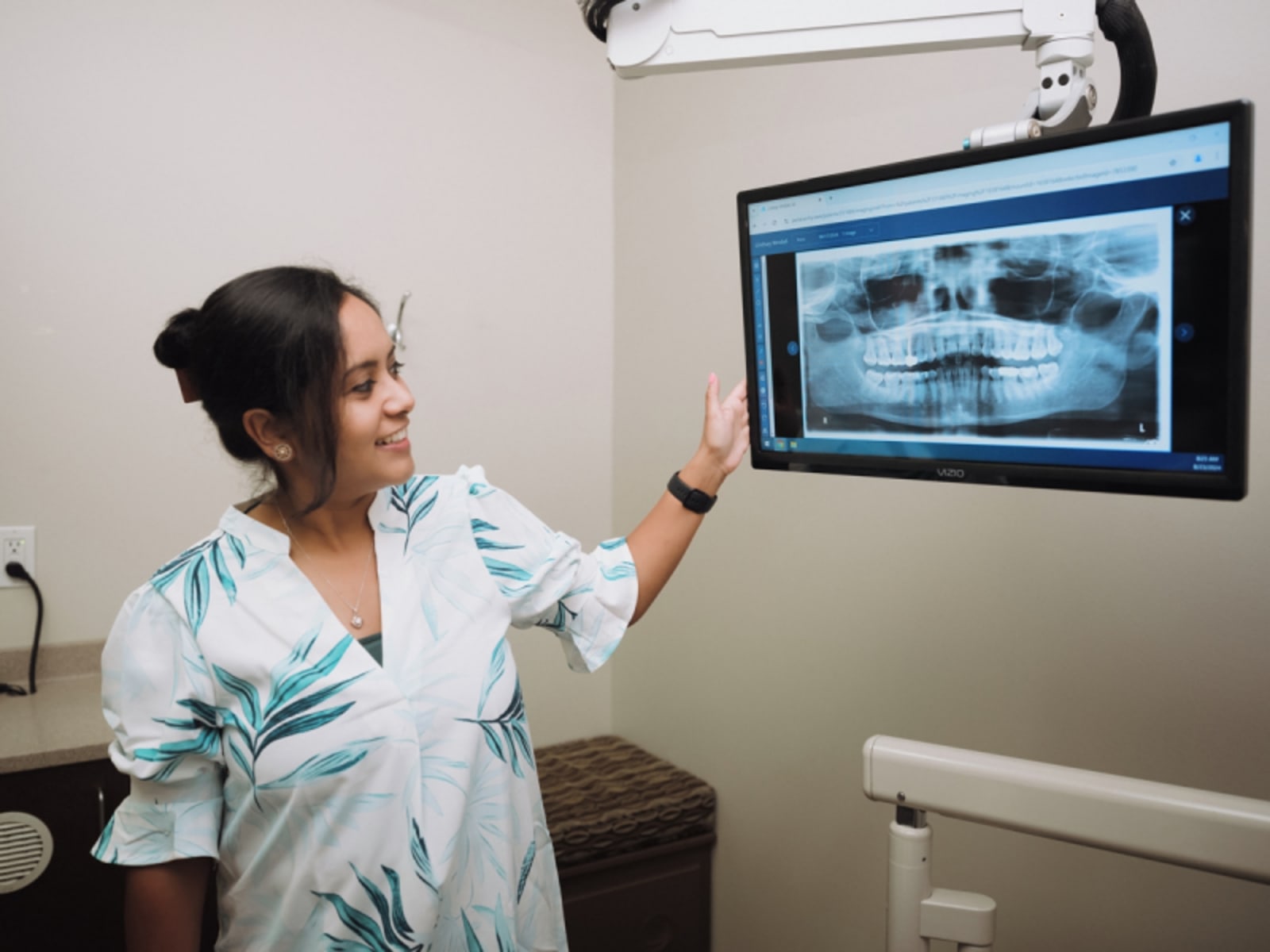
How long treatment takes depends much more on the complexity of your case than on whether you choose aligners or braces. Mild crowding can resolve in just a few months, while a full bite correction may take well over a year. Anyone who gives you a firm timeline before actually looking at your records is making their best guess, which is why we always start with a consultation and full records before we talk numbers.
The first week
With aligners, your teeth will feel a little tight and tender, especially in the first day or two after switching to a new tray. It feels more like pressure than pain, and most people manage it easily with over-the-counter pain relief.
Your speech may also feel slightly different during this adjustment window. With braces, the first week brings similar soreness, plus some cheek and lip irritation as the soft tissue gets used to the brackets.
The rhythm of treatment
With aligners, you switch to a new tray on a set schedule, usually every one to two weeks, and your check-in visits with us are spaced further apart. Each new tray brings about a day of tightness, and then it settles. With braces, you come in for regular wire changes and adjustments, and some soreness typically follows each visit.
The middle stretch
This is the phase where most people stop thinking about treatment much at all. Swapping trays becomes second nature, tenderness is minimal, and you can actually see your teeth moving, which keeps most people motivated. That said, this is also when it gets easy to let wear time slip a little. Try to stay consistent, because those hours add up.
Refinements near the end
Teeth do not always move in exactly the way the original plan predicted, and that is completely normal. When small adjustments are needed, we take a new scan and create a short additional series of trays to fine-tune the final result. These are called refinements, and they are included in our all-inclusive Invisalign fee, so a longer finish does not change what you pay.
Finishing
Once your teeth are in their final position, the small composite attachments bonded to your teeth are gently removed and polished off, final records are taken, and your retainers are made. Cosmetic finishing touches like bonding or whitening are typically scheduled after this point, once your teeth are exactly where they need to be.
Retention and Aftercare: Keeping Your Results for Life
Here's something that surprises a lot of people: once your teeth are straightened, they will naturally try to drift back toward where they started. This isn't a flaw in the treatment. It's just how teeth work.
That's why retention isn't the finish line. It's the ongoing habit that protects everything you worked for. Most of the adult relapse cases we see involve people who wore their retainers consistently for a year and then gradually stopped.
Life gets busy, and the habit slips. The good news is that staying on top of it is simple once you know what to expect.
Removable retainers
These are clear trays, similar in feel to your aligners, worn on a schedule. Right after treatment wraps up, you'll typically wear them full-time for a short period, then transition to nightly wear for the long run. If a retainer cracks or warps, replace it rather than continuing to use one that no longer fits properly.
Fixed retainers
A fixed retainer is a thin wire that gets bonded to the back side of your front teeth, where it's completely invisible from the outside. Because it's always there, it holds your teeth in place around the clock without you having to remember anything. The main thing to be aware of is flossing technique.
You'll need to thread floss under the wire rather than sliding it straight down between teeth, which takes a little practice but becomes routine quickly. It's also worth checking in with Dr. Amrita periodically, since a bonded wire can occasionally come loose without you noticing right away.
Night guards for grinders
If clenching or grinding was part of what caused your teeth to shift in the first place, it's important to protect your new alignment once treatment is done. In some cases, a retainer can be designed to double as a night guard.
In others, a separate guard is the better fit. Heavy grinding often puts strain on the jaw joint as well, and Dr. Amrita can evaluate that alongside your alignment care so everything is addressed together.
What relapse looks like
Relapse usually starts small. A lower front tooth rotates slightly, or a tiny gap begins to reopen. When it's caught early, it's often fixable with a fresh retainer or a very short series of trays. When it's left alone for years, it can mean starting full treatment over again. The simplest thing you can do is wear your retainers consistently and mention any changes you notice when you come in for checkups with Dr. Amrita.
Ready to Talk About Your Own Teeth?
Reading about Invisalign and braces is a great starting point, but no guide can tell you what your specific bite, roots, and gum health will allow. That's exactly what a consultation is for.
You can book a free video or in-person Invisalign consult at a time that works for you, or call us at (253) 850-1600 if you'd rather talk through your questions first. Either way, we're here to help.
Connect
We can’t wait to meet you! Call 253-850-1600 or request an appointment online to set up your first visit. We’ll be in touch soon.